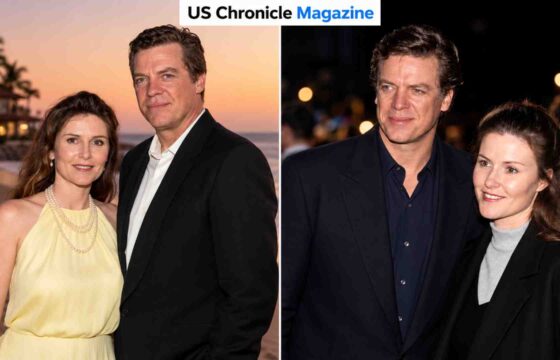
Michael Greenburg is an American television producer known for his work on MacGyver and Stargate SG-1. He was also the first husband of actress Sharon Stone. They married in August 1984, before she became a major movie star. While she built a career in front of the camera, he helped bring some of TV’s best-known adventure shows to the screen.
Michael Greenburg’s name does not appear in big letters on movie posters. But producers do a lot of the work that viewers never see. They help turn scripts into scenes, guide crews, and solve problems before a show reaches the screen. He spent years doing that job with actor Richard Dean Anderson.
In this article, we will look at his early love of film, his work on two hit shows, his marriage, and the projects that shaped his career. We will also sort confirmed details from claims that have little proof. Let’s start with the person behind those familiar shows.
Quick Facts
- Known for: Television producing on MacGyver and Stargate SG-1
- Other work: Writing, directing, and film production
- Birthplace: San Antonio, Texas
- Grew up in: Scarsdale, New York
- Education: University of Southern California; further film study at UCLA
- Longtime collaborator: Richard Dean Anderson
- Company: Big Pix Inc.; also worked through Gekko Film Corp
- First wife: Sharon Stone
- Marriage: August 18, 1984, until divorce in the late 1980s
Who Is Michael Greenburg?
Michael Greenburg built a long career behind the camera. He produced television shows, helped plan shoots, and worked closely with actors and writers. His best-known credits are linked to the problem-solving hero of MacGyver and the space adventures of Stargate SG-1.
He is sometimes introduced only as Sharon Stone’s first husband. That fact is part of his life, but it leaves out years of work in television. He made shows while she was still finding the roles that would make her famous.
He also had a long partnership with Richard Dean Anderson, who starred in both series. Their work shows how one strong professional bond can lead from a crime-adventure show to a much larger science-fiction world.
A Childhood Love of Making Films
Michael Greenburg was born in San Antonio, Texas, and grew up in Scarsdale, New York. As a teenager, he already wanted to make films. It was not a goal that appeared only after he reached Hollywood. He and a friend made projects together while they were still young.
In an interview from 2003, he recalled working with his friend Kenny Neigh. They came up with the name Big Pix Inc. for their film work. After Kenny died in a car crash, he kept using that name to honor him.
The two also took on an early paid project about the history of the Presbyterian Church. It gave him hands-on work as an assistant director. He learned that a film needs far more than a camera and a good idea. Sound, lighting, shots, and timing all have to work together.
Film School and His First Jobs
Michael Greenburg went to the University of Southern California. He later did more study at UCLA. Both schools are in Los Angeles, close to the heart of the American film industry. But learning how movies work in class was only one part of his training.
He spent time as an assistant director. On a busy set, that role helps keep the shoot on track. People must be in the right place, scenes must be ready, and the team has to work to a plan. The work can be fast and stressful.
He also had experience linked to the world of professional skiing. This may seem far from Hollywood, but sports work can teach crews to plan action and capture events that do not stop for the camera. His later career would cover both stories with actors and projects tied to sports.
The First Big Producing Break
Michael Greenburg’s early break came with The Golden Moment, a 1979 NBC mini-series. By then, he had years of work behind him. He was no longer just helping others on set. He was taking on greater responsibility for how a production came together.
A producer must keep the whole project in view. A director may focus on the best way to shoot a scene. A writer may focus on the story. A producer helps balance those needs against time, money, and what the crew can do.
Michael Greenburg went on to work on television movies and larger series. Those jobs gave him a base in many types of film work. They also helped him move into weekly television, where a crew must finish one episode and then start the next.
How MacGyver Changed His Career
MacGyver began airing in 1985. Its main character, played by Richard Dean Anderson, used clever ideas and ordinary tools to get out of danger. The show’s focus on thinking before fighting helped it stand out from other action programs.
Michael Greenburg joined the series after its first season. He had worked on movies and mini-series, but a weekly show was a new test. Each episode needed sets, locations, stunts, and a story that would keep viewers watching.
In a detailed interview on Richard Dean Anderson’s official fan archive, he explained how he was hired and how a short job turned into years of work. He had first expected a brief stay. Instead, he spent much of the run helping make the show.
That work brought him into a close partnership with Anderson. They had seen what could happen when a good team, a clear idea, and careful production all came together. They would use those lessons again.
The Partnership With Richard Dean Anderson
Michael Greenburg and the actor did not know each other before MacGyver. They met through the series and found a way to work well together. A strong team can make it easier to plan new shows because the people involved already know how the other thinks.
They later worked through Gekko Film Corp. Their projects included two MacGyver television movies and the western adventure series Legend. This was more than a partnership built around one character.
In interviews, both men spoke with care about Legend. Though the show had a short run, they enjoyed its mix of action, humor, and an unusual lead character. Its brief life was not the same as a lack of effort or belief in the idea.
Michael Greenburg brought the same practical skills to each new project. He knew that a good story still needed a crew that could make it real on screen.
His Work on Stargate SG-1
Stargate SG-1 began in 1997. It followed a team that traveled through a strange device to other worlds. The series had action, humor, military characters, new planets, and a growing set of allies and enemies.
Michael Greenburg worked as an executive producer and spent time on the set. That meant keeping an eye on each part of the shoot, from the first plans to the last edits. A show with new worlds and special effects brought many challenges that were different from a city-based adventure.
He worked with the writers, cast, and crew to make sure the story could be filmed. Props, sets, lighting, and effects all had to help create places that did not exist in real life. A scene could be written in a short paragraph but take a great deal of work to produce.
Michael Greenburg helped guide the show during a long period of its run. His work shows how a producer can shape the pace and feel of a series without being one of its on-screen heroes.
Why the Stargate Franchise Lasted
The show grew into a wider world of stories and characters. It found an audience that liked seeing a familiar team face new places and problems. Some episodes centered on action. Others asked harder questions about power, trust, or what people might do in a strange world.
In a 2004 story, Multichannel News reported on the show’s growth and quoted the producer about its staying power. He pointed to the team, the idea, and the care put into each episode, rather than taking all the credit himself.
That shared work was key. The series needed actors, writers, directors, artists, and technical crews who could work at a steady pace for many seasons. One person could not do all of those jobs.
His role was to help those parts fit together. Viewers saw an exciting trip through a gate. Behind the screen was a large group making each trip possible.
Other Shows and Movies in His Career
Michael Greenburg did not spend all his time on two hit series. His credits also include Legend, television movies, and projects such as Firehouse. He helped produce the film Allan Quatermain and the Lost City of Gold.
These projects were not all alike. A western story needs a different look from a space adventure. A television film has a different pace from a weekly series. Moving between them meant learning how to handle new teams and new problems.
Michael Greenburg also took an interest in sports films and projects. Michael Greenburg’s career crossed more than one part of the entertainment business. That variety is useful context for his time in Hollywood.
The Marriage to Sharon Stone

The producer married actress Sharon Stone on August 18, 1984. They had met while working in film and television. It was years before her star turn in Basic Instinct made her one of the best-known actors of the 1990s.
At the time, she was taking on film roles and trying to build her career. He was working behind the scenes. They were both part of the same industry, but their jobs put them in very different places on a set.
Old biographical listings give slightly different details about when their divorce took effect. The important confirmed point is that the marriage ended in the late 1980s. A later film success should not be treated as proof of why the relationship ended.
Michael Greenburg continued his work in television after the split. His career is best judged by the shows he helped produce, not by guesses about a private marriage that ended long ago.
Why the Divorce Timeline Can Be Confusing
Celebrity profiles do not always agree on dates. Some listings give a 1987 divorce date, while other accounts describe a later legal end. A separation and a final divorce can also happen at different times.
For that reason, it is safer to say the marriage began in 1984 and ended after a few years. There is no need to invent a detailed account of the private talks or the reason the couple broke up.
Sharon Stone later married journalist Phil Bronstein. She also became a mother. Those events came after her relationship with the producer and belong to another part of her life story.
What His Interviews Tell Us About His Work
In interviews, the filmmaker speaks about the work rather than fame. He has described himself as someone who wants to make films, not someone who wants a single job label to define him.
He also liked being close to the set. Some producers handle most of their work from an office. He took pride in staying near the crew and helping solve daily problems while episodes were being made.
That approach helps explain the long run of projects made with the same partners. Trust is important when every day brings new choices about money, time, scenes, and changes to a script.
Michael Greenburg has a body of work that includes adventure, science fiction, movies, and sports. That is a stronger account of his professional life than treating him only as part of someone else’s personal history.
Life Outside the Spotlight
Many viewers could name Richard Dean Anderson or Sharon Stone right away. Fewer would know the face of the producer who worked with them. That is normal in television. Most of the people who make a show are not stars.
Public sources do not give a full account of his current day-to-day life. Online pages sometimes offer exact figures for net worth, homes, or recent business plans. Without reliable records, those claims should not be treated as facts.
Michael Greenburg’s interviews and screen credits are a firmer guide. They show where he worked, which shows he helped make, and what he thought was important on a set.
Final Thoughts
Michael Greenburg has a story that goes well beyond his brief marriage to Sharon Stone. He loved film when he was young, learned by doing, and helped make two of TV’s best-known adventure shows.
Michael Greenburg’s long work with Richard Dean Anderson is one of the most important parts of that story. Together, they moved from MacGyver to Stargate SG-1, bringing new ideas to people watching at home.
The lesson is simple. Some of the people who make great television are not the ones we see on screen. Their work still shapes the stories we remember.
Frequently Asked Questions
Was Michael Greenburg an actor?
Michael Greenburg’s main work was producing, but he also has small screen and writing credits.
Did he make every episode of MacGyver?
No. He joined after the first season and worked on much of the later run.
Was he involved with the original Stargate movie?
His best-known work is on the Stargate SG-1 television series, which began after the movie.
Was Richard Dean Anderson his business partner?
Yes. The two worked together for many years and made projects through Gekko Film Corp.
Is his personal net worth publicly verified?
No solid public record gives an exact current number. Online estimates should not be stated as fact.