
Jeffrey Hayden was an American television, film, and theater director. He helped shape early live TV drama and later directed some of the best-known shows in the United States. He was also married to Oscar-winning actress Eva Marie Saint for 65 years, until his death in 2016.
His work reached far beyond one era of TV. He moved from live broadcasts to filmed comedy, crime drama, daytime serials, stage plays, and public television. He also spoke up for the rights of directors at a time when the job was still taking shape.
In this article, you’ll learn how his career began, which shows he helped make, what he did beyond network TV, and why his work still matters. Let’s start with the life behind those familiar screen credits.
Quick Facts
- Full name: Jeffrey Hayden
- Born: October 15, 1926, in New York City
- Died: December 24, 2016, at age 90
- Known for: Directing television, films, stage plays, and documentaries
- Education: University of North Carolina at Chapel Hill
- Spouse: Actress Eva Marie Saint (married in 1951)
- Children: Two, Darrell and Laurette
- Notable work: The Andy Griffith Show, Peyton Place, Magnum, P.I., and Santa Barbara
Who Was Jeffrey Hayden?
Jeffrey Hayden was a director and producer whose career began during television’s first major years. He worked in live broadcasts before moving to filmed TV series. His credits include light family comedy, tense crime stories, and long-running drama.
He was not tied to one hit show. Instead, he worked across many networks, casts, and formats. That range was a big part of his career. A director had to understand the actors, set, crew, script, and pace of each new show.
Jeffrey Hayden also directed stage plays and nonfiction films. His marriage to Eva Marie Saint made him known to fans of classic Hollywood, but his own body of work stands apart from her film career.
How His Early Television Career Began
Born in New York City in 1926, Jeffrey Hayden came of age as television grew into a new form of mass entertainment. After graduating from the University of North Carolina at Chapel Hill, he started at NBC in New York. He then joined ABC as an associate director.
Those jobs gave him a close view of how a live program came together. Early television had no easy way to fix a missed cue after a show went on the air. Cast and crew had to be ready, and a director needed to make clear choices in real time.
He soon worked on color specials, variety shows, and quiz programs. They asked for very different skills. A song number needed careful camera timing, while a dramatic scene depended on mood and a strong link between the actors.
That mix of work gave him a base for the rest of his career. He learned to move between styles while keeping the story easy to follow for viewers at home.
Live Drama and His Work With Major Actors
In 1954, producer Fred Coe brought Jeffrey Hayden onto The Philco Television Playhouse. The program was known for live dramas. It gave new writers and actors a place to do serious work at a time when TV could still feel close to a theater stage.
He directed productions with performers such as James Dean, Walter Matthau, and Paul Newman. These were demanding jobs. Every actor brought a different style, and each story needed its own tone. Good live drama called for strong plans and the skill to adjust when a scene changed.
Jeffrey Hayden also worked on Omnibus, the arts and culture program, and directed his wife alongside actor Richard Kiley. This part of his career linked theater, education, and television in ways that later became less common on major networks.
The live years show why his later range mattered. He did not learn to direct by following a single formula. He learned to listen to actors and use the tools at hand to serve a story.
The Television Shows He Helped Bring to Life
As filmed series grew, Jeffrey Hayden built a long list of directing credits. Viewers may know his work from Leave It to Beaver, The Donna Reed Show, and The Andy Griffith Show. Each series called for a calm, clear approach to family life and comedy.
He also directed 77 Sunset Strip, Route 66, Peyton Place, and Mannix. These shows used different kinds of stories. Some followed a mystery or a journey, while others relied on the slow change of a character’s life over many episodes.
Later credits included Quincy, M.E., Ironside, Cagney & Lacey, Magnum, P.I., and In the Heat of the Night. The long span of his career meant that he had to adapt as TV sets, editing styles, and the tastes of viewers changed.
Directing one episode of a series is not the same as creating the show. Still, a guest director plays a key role. He must match the series’ tone while helping that episode feel alive. That was a skill Hayden used again and again.
Film, Daytime Drama, and New Formats
Jeffrey Hayden’s one feature film as director was The Vintage, released in 1957. It starred Michèle Morgan, Pier Angeli, John Kerr, and Mel Ferrer. The film was a different test from a short live broadcast because its scenes could be planned and shot over time.
He later worked as an executive producer and director on the daytime drama Santa Barbara. A serial must keep stories moving across many episodes. A director and producer also need to make room for the work of writers, actors, editors, and other teams.
His credits show the growth of American television itself. Over the years, the medium moved from live studio plays to filmed series, more complex crime shows, and daily dramas with large casts.
That range is easy to miss when a name appears for only a moment in the credits. Yet it tells us much more about the work than a single title ever could.
Stage Work and His Creative Partnership With Eva Marie Saint
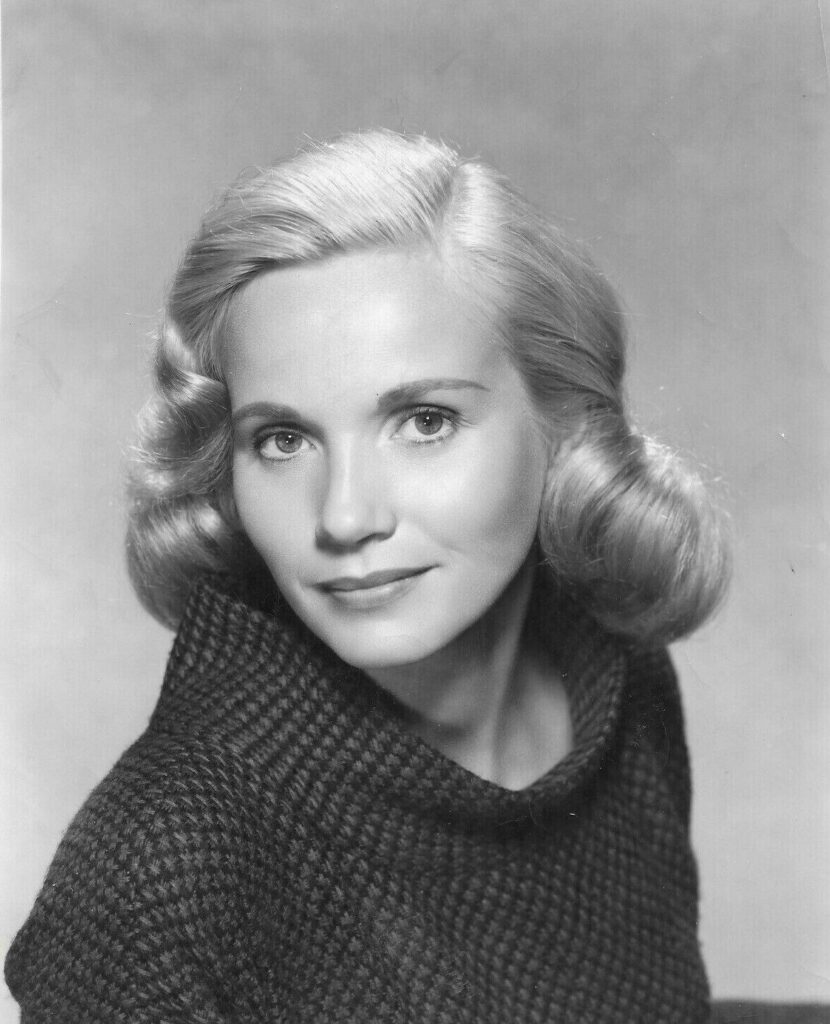
Jeffrey Hayden kept a strong tie to the theater. He directed productions of The Front Page, Death of a Salesman, and The Country Girl, along with other plays. Theater asked him to shape a full story that actors could carry from start to finish before a live crowd.
He and Eva Marie Saint also worked together on stage. Their projects included Summer and Smoke, Desire Under the Elms, and Duet for One. It was a creative partnership as well as a marriage, with each bringing years of craft to the work.
The couple married in 1951 and raised two children, Darrell and Laurette. Saint won an Academy Award for On the Waterfront and also starred in Alfred Hitchcock’s North by Northwest. Their careers often ran side by side rather than along the same path.
His theater awards included a Drama-Logue honor for The Country Girl. That recognition shows another side of his work: beyond a busy network schedule, he still cared deeply about what could happen on a stage.
Documentaries, Education, and Work With Bill Moyers
Late in his career, Jeffrey Hayden gave time to nonfiction film. He wrote, produced, and directed Primary Colors: The Story of Corita, a public television documentary about artist and educator Corita Kent. The film won a Cine Golden Eagle Award.
He also worked on Children in America’s Schools with Bill Moyers. That documentary looked at the state of schools and gave a public audience a way to engage with the topic. His work on it was honored with a New York Emmy and a Cine Golden Eagle Award.
These films were not just a change of subject. They showed that the skills of a drama director could serve real people and public issues. A nonfiction story still needs a clear shape, a steady pace, and care for its subjects.
The Television Academy’s profile of Jeffrey Hayden records these honors, along with his work in TV and theater. It offers a wider picture of a career that crossed the usual lines between entertainment and public life.
Why He Fought for Directors’ Creative Rights
A less well-known part of Jeffrey Hayden’s legacy was his work for fellow directors. In 1964, he helped found the Directors Guild’s Creative Rights Committee. Its goal was to protect the role of the director during film and TV production.
Issues included the right to prepare a director’s cut, a place for the director to work, and fair work hours. They may sound like small details. In practice, they shape how a director can plan, make choices, and work with the cast and crew.
The Directors Guild of America’s Visual History documents this role and lists more than 60 series in his directing career. It also preserves the perspective of a professional who saw many changes in the industry.
This service gave his work an effect beyond his own episodes. It helped make room for creative judgment in a business where time, money, and network demands often pull in different directions.
Awards and the Lasting Value of His Work
Jeffrey Hayden’s honors went beyond the documentary awards. He received a Governor’s Media Award for The Loretta Young Show and an NAACP Award for Palmerstown, U.S.A.. They point to work in both entertainment and stories about American life.
He also made room for new forms and new audiences. Family sitcoms, police dramas, stage plays, and education films did not ask for the same tools. He had to find the right pace and feel for each one.
Jeffrey Hayden’s work has lasting value because the credits span several key decades of television history. They trace a move from live drama to modern series production. They also show how much of TV depends on people whose names are known far less than the stars.
Jeffrey Hayden died on December 24, 2016, at age 90. His career remains a clear example of what a skilled director can build by working across genres, eras, and teams.
Final Thoughts
Jeffrey Hayden’s story is not only about being married to a famous actress. He made a life of telling stories, guiding actors, and helping new forms of television find their voice.
His best lesson may be that steady craft matters. Some of his work aired in living rooms, some played on stage, and some asked the public to think about schools or art. Each needed a different kind of care.
He also worked to protect directors’ rights, so his mark can be found both on screen and in the way the job is done. That is a rare and lasting kind of success.
Frequently Asked Questions
Did Jeffrey Hayden ever direct a feature film?
Yes. He directed The Vintage, a 1957 film with Michèle Morgan, Pier Angeli, John Kerr, and Mel Ferrer.
Which university did he attend?
He graduated from the University of North Carolina at Chapel Hill before starting his broadcast career in New York.
Did he direct any programs for children or young viewers?
Yes. His credits include ABC afterschool specials, as well as family shows such as Lassie and Dennis the Menace.
Did he receive awards for documentary work?
Yes. Primary Colors: The Story of Corita earned a Cine Golden Eagle. His work on Children in America’s Schools with Bill Moyers earned a New York Emmy and a Cine Golden Eagle.
Was he involved in efforts to improve directors’ working conditions?
Yes. He helped found the Directors Guild’s Creative Rights Committee in 1964. Its work included creative control and job conditions for directors.
You may also read: