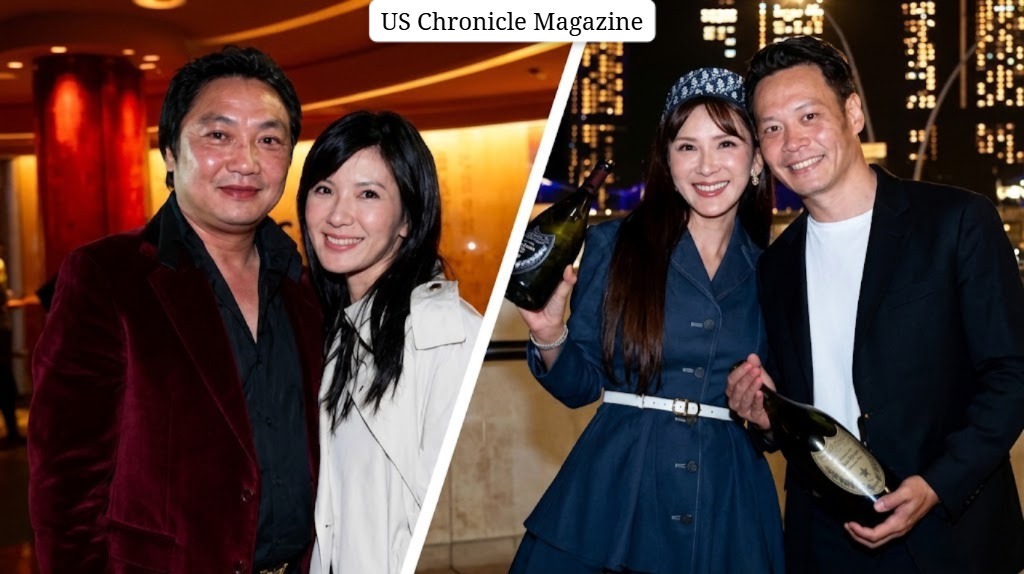
Nurdian Cuaca is an Indonesian businessman and the former husband of Singapore socialite Jamie Chua. Their divorce made news after Chua asked for S$450,000 a month in support. The couple settled the case in November 2011. The requested sum was not a confirmed monthly award, and the final terms were not made public.
In this article, we look at the court dispute, the assets involved, and the couple’s family story. We also explain what Chua said in a later interview, why old financial figures can mislead readers, and what the public record tells us about Cuaca today.
The Facts Behind a Famous Divorce Headline
Cuaca became known to many readers through a court case rather than through interviews about his work. The size of Chua’s request drew attention in Singapore and beyond. It also led to a common mistake: treating the amount she asked for as money she was certain to receive.
The dispute had several parts. One concerned support after the marriage broke down. Another concerned property that might be divided. A court order kept certain assets in place while the case moved ahead. These steps had different purposes and should not be joined into one figure.
A report in The Star on November 17, 2011 said the couple reached an agreement in Singapore’s High Court. Justice Tay Yong Kwang recorded the settlement. The report did not state the full value of the deal or a lasting payment schedule.
The Marriage Before the Court Case
Jamie Chua worked as a flight attendant for Singapore Airlines before moving into fashion and business. She and Cuaca married and had two children. Their years together began long before Chua became widely known for her designer bags, luxury style and online presence.
Many accounts of the couple focus only on their wealth. That leaves out a long shared family life. Chua later said that the business success they enjoyed did not exist at the start of their relationship. Her words give a different view of the early marriage.
In a September 2021 talk with host Paige Parker, Chua also corrected a popular story about their first meeting. She said a friend of Cuaca introduced them. She did not meet him as a passenger on a flight. This was her firsthand account, not a scene from a celebrity romance.
How the Dispute Reached the Courts
By 2010, the marriage was in trouble and money had become a major point of conflict. Chua sought financial support. Lawyers also dealt with property that could be part of a settlement. The legal steps brought the former couple into public view at a difficult time.
The press reported a claim for S$450,000 each month. A request is what one side asks the court to consider. It does not mean a judge has granted it. Nor does it show what the two sides might accept if they later choose to settle.
That difference is central to the story. A reader may see a large amount in a headline and assume it became a permanent benefit. But the published account of the final agreement does not prove that result. The claim and the outcome must be kept apart.
The Asset Freeze Was Not a Payout
During the case, an order restricted dealings with a large pool of assets. The law firm that acted for Chua identifies a worldwide Mareva injunction of about S$92 million in Chua Xin Yin v Nurdian Cuaca. Such an order aims to keep property available while a dispute is heard.
The assets discussed in coverage included company interests, homes and luxury goods. Their value helped show the scale of the case. But an asset freeze does not transfer that sum to a former spouse. It also does not show that every item was owned outright or free of debt.
Old values are even less useful as a measure of wealth today. Property can be sold. Share prices can change. A business may take on debt. The figures from a case fifteen years ago cannot tell readers what Cuaca owns in October 2026.
What Happened in November 2011
The couple resolved their dispute through a settlement. Contemporary reporting described the outcome as amicable and said it was recorded in the High Court. That is a legal result. It does not prove that the former spouses became friends or agreed on every personal issue.
The reported terms were limited. No full list of transfers, payments or future duties was released in the article. This is why claims that Chua received the entire sum under the asset order are unreliable. The frozen amount and the agreed settlement were not the same thing.
The safe conclusion is simple. The support demand was public. The asset order was reported. The couple then reached a deal in November 2011. Anyone giving a precise final payout needs a separate, trustworthy record of the agreement.

Cleveland and Calista: The Family Connection
Cuaca and Chua have two children, Cleveland and Calista. Their names appear in Chua’s public interviews and posts. Both children grew up while their parents were building a life together. Their family ties continued after the marriage ended.
In her 2021 conversation with Paige Parker, Chua said Cuaca had stayed close to their children. This adds context to a case often told only through money and conflict. It is still her account from that time, not a full record of private family arrangements.
There is little value in guessing about the children’s daily lives or their parents’ private decisions. The known facts are enough to explain the family link. Cuaca is their father, and Chua has spoken publicly about the bond they kept with him.
Chua’s Account of Their Shared Success
Chua said in 2021 that Cuaca was not wealthy when they met. She described his fortune as something that developed later. She also said she had played a part in their business success. These remarks challenge the idea that their marriage began as a simple exchange of wealth and status.
Her interview also touched on hard times during the divorce. She said she sold some Hermès bags to help provide for her children. The comment offers a more personal view of a period often shown through photos of expensive goods. It does not reveal the couple’s full finances.
After the split, Chua built a highly visible career in fashion and online media. Cuaca did not follow the same public path. As a result, many later accounts of their marriage come from her interviews. They should be identified as her memories, not presented as statements made by both people.
The Problem With Online Net-Worth Estimates
A court order covering a large sum can look like a ready-made net-worth figure. It is not. The order aimed to protect property during a case. It did not give a complete list of assets, debts and ownership shares for use in a modern wealth estimate.
A true estimate would need current business records, property interests and liabilities. The old case does not provide those details. Even the amount Chua requested in support cannot be used to calculate Cuaca’s income. A demand from one side is not an audited financial statement.
Some sites still turn the 2011 figures into precise claims about his fortune today. Those numbers can mislead readers. It is more accurate to say that major assets were discussed in the divorce case and that his present net worth is not established by that record.
Why Little Is Known About His Recent Life
Cuaca is usually described in the press as an Indonesian businessman. He has not shared the same volume of recent public interviews as his former wife. That leaves fewer solid facts about his current business work, home or relationships.
A quiet public profile does not prove retirement, a new marriage or financial trouble. Those claims need direct evidence. It would also be unfair to infer his feelings about the divorce from the size of a past legal claim.
The most useful profile stays close to events that can be checked. His marriage, children, court dispute and settlement explain why his name is searched. They do not justify invented details about his health, private plans or present wealth.
How to Read the Numbers Without Being Misled
There are three figures or outcomes to keep separate. The S$450,000 amount was a monthly support request. The roughly S$92 million order was meant to preserve assets. The November 2011 settlement was an agreement whose detailed value was not reported.
None of those facts can stand in for another. A support request does not prove a payment. An asset freeze does not prove a transfer. A settlement does not make all its terms public. Once those differences are clear, the story is much easier to understand.
The case also shows why a person’s public image can be incomplete. Chua later described the marriage and its end in her own words. Cuaca has kept a lower profile. Readers can respect both the known court events and the limits of what the public can fairly say.
Frequently Asked Questions
Who is Nurdian Cuaca?
He is an Indonesian businessman known for his former marriage to Singapore entrepreneur Jamie Chua and their 2011 divorce dispute.
Did Jamie Chua receive S$450,000 every month?
That was her reported request for maintenance. The published settlement account does not establish a permanent payment of that amount.
What was the asset freeze in the divorce case?
It was a court order designed to preserve assets during the proceedings. It was not a confirmed payout or a current net-worth figure.
Who are Nurdian Cuaca’s children?
He and Jamie Chua have a son, Cleveland, and a daughter, Calista. Chua discussed their family ties in a 2021 interview.
You may also read: Dixie Brubaker: Age, Divorce, Career, and Net Worth